Source Underground Mining Electric Delivery Tricycle for Factories, Mines, and Warehouses
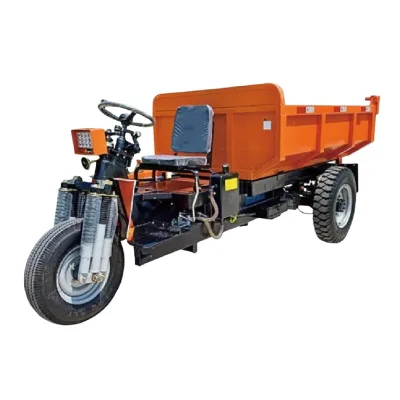
Explore 27 listings for the underground mining electric delivery tricycle, featuring diesel or battery power options with load capacities up to 30 tons. Buyers can compare specifications, certifications, and pricing from verified manufacturers to find the right vehicle for cargo transport in confined spaces.
Key considerations
Products List


Comprehensive Sourcing Guide
Strategic Sourcing Guide for Underground Mining Electric Delivery Tricycles
Defining the Operational Scope and Technical Baseline
The procurement of underground mining electric delivery tricycles requires a precise understanding of the unique environmental constraints and performance demands inherent to subterranean operations. Unlike surface logistics, underground environments impose strict limitations on vehicle dimensions, emission profiles, and power delivery systems. Based on current market data, the target category encompasses specialized electric utility vehicles designed for cargo transport within confined mine shafts and tunnels. These units are frequently categorized under specific product names such as "Volquete Subterranea" or "Volquete De Mina," indicating their primary function as mining dump trucks or delivery tricycles tailored for subterranean use.
A critical technical baseline for these vehicles involves their power source configuration. The supply chain currently offers units powered by a combination of diesel engines and battery groups, though the specific focus for "electric delivery" implies a reliance on battery technology. The observed battery specifications point to the use of Lithium-Ion Battery systems, which are preferred for their energy density and cycle life in high-vibration environments. The engine capacity for these units is generally observed in the range of 0-5L for diesel variants, while the electric variants rely on battery groups with horsepower ratings spanning from 0 to 300HP, with a specific subset of high-performance models operating between 150 and 250HP.
The physical dimensions and load capacity are equally defining characteristics. Buyers must verify that the vehicle's width falls within the range of 950mm to 2400mm to ensure compatibility with mine tunnel clearances. The load capacity is a primary differentiator, with market listings indicating capabilities ranging from 1 to 10 tons, and in some heavy-duty configurations, extending up to 30 tons. The body type is consistently observed as "Open," facilitating the rapid loading and unloading of bulk materials. The carriage thickness is a structural specification that buyers should scrutinize, with standard configurations often citing a bottom thickness of 6mm and side thickness of 4mm to withstand the abrasion of mining materials.
Compliance, Certification, and Emission Standards
In the realm of underground mining, regulatory compliance is not merely a formality but a safety imperative. The procurement of electric delivery tricycles must prioritize vehicles that meet rigorous international and regional certification standards. The observed certification landscape for these products includes EPA, DOT, CCC, CE, UL, and ISO 9001:RoHS. These certifications validate that the vehicle meets specific safety, environmental, and quality management benchmarks. For instance, the presence of DOT certification suggests compliance with Department of Transportation standards, while EPA certification indicates adherence to emission regulations, which is particularly relevant for hybrid or diesel-electric models.
Emission standards are a pivotal factor, especially for underground applications where ventilation is limited. The market data presents a dichotomy in emission profiles. Some units are listed with an "Euro Engine" standard, implying compliance with European emission norms, while others are explicitly marketed with a "Zero Emission" status. This distinction is critical for buyers targeting strictly electric operations. The "Zero Emission" claim is a significant advantage for underground mines aiming to reduce carbon footprints and improve air quality for workers. However, buyers must verify the validity of these claims against the specific power source configuration, as some listings may refer to the electric mode of a hybrid system.
Tire certification is another area requiring strict verification. The tires used in these vehicles must be robust enough to handle rough underground terrain. The observed tire certifications include ECE, GCC, ISO, and DOT. The tire design is predominantly "Mining Tyre" or "Tubeless," with specific mentions of "Chaoyang Mining Tyre" as a supplier. The choice of tire impacts traction, durability, and safety. Buyers should ensure that the tire specifications align with the vehicle's load capacity and the specific geological conditions of the mine. The steering wheel design, observed as either "Hydraulic/Gear" or "Turbine Way," also influences maneuverability in tight spaces, and this should be cross-referenced with the vehicle's turning radius requirements.
Cost Drivers and Pricing Structures
Understanding the cost drivers for underground mining electric delivery tricycles is essential for budgeting and total cost of ownership (TCO) analysis. The observed price range in the market spans from $238 to $6,300 USD. This wide variance suggests a significant differentiation in product tiers, ranging from basic utility models to heavy-duty, high-capacity units with advanced features. The lower end of the price spectrum likely corresponds to smaller capacity vehicles with basic battery configurations, while the upper end reflects units with higher horsepower, larger load capacities, and comprehensive certification packages.
Several factors contribute to the final pricing. The battery supplier is a primary cost driver, with observed suppliers including Chaowei and Tianneng. The quality and capacity of the battery directly influence the vehicle's range and operational efficiency. Additionally, the engine manufacturer plays a role in pricing, with brands like Changfa, Yunnei, and Weichai being common suppliers for diesel components in hybrid models. The customization options, such as the "Capony" (Roof/Cabin) and specific dumping mechanisms, also add to the cost.
The minimum order quantity (MOQ) is another financial consideration, with observed ranges from 1 to 100 units. Buyers purchasing in smaller quantities may face higher per-unit costs or limited customization options, whereas bulk orders could unlock volume discounts. The condition of the vehicles is consistently listed as "New," which implies that the pricing reflects the cost of manufacturing and assembly rather than refurbished or used equipment. Buyers should also consider the "prod_packing" as "Standard Packing," which may affect shipping costs and insurance premiums.
Typical Applications and Operational Versatility
The operational versatility of underground mining electric delivery tricycles makes them suitable for a wide range of applications within the mining sector. The primary usage is designated as "Cargo," indicating their role in transporting raw materials, equipment, or waste products within the mine. The "Dumping Type" is consistently observed as "Front Lifting Style," which facilitates efficient unloading in confined spaces. The "Dumping Way" is further specified as "Hydraulic Cylinder," ensuring reliable and controlled material discharge.
These vehicles are particularly well-suited for applications requiring high maneuverability and low emissions. The "Driving Way" options, including Left/Right Drive, allow for customization based on the mine's layout and traffic flow requirements. The "Steering Wheel" options, such as "Hydraulic/Gear" or "Turbine Way," provide different levels of control precision. The "Body Type" being "Open" allows for easy loading of bulk materials, while the "Carriage Thickness" ensures durability against abrasion.
The "Case" or target market for these vehicles includes regions such as Malaysia, Gongo, Ecuador, Bolivia, Peru, and Chile. This geographic diversity highlights the adaptability of these vehicles to different mining environments and regulatory frameworks. The "Starting Way" is observed as "Automantic," suggesting ease of operation and reduced wear on mechanical components. The "Wheel Distance" of 1040mm provides a stable platform for navigating uneven terrain.
Supplier Evaluation and Quality Assurance
Evaluating suppliers for underground mining electric delivery tricycles requires a multi-faceted approach that goes beyond price comparisons. The "prod_origin" is consistently listed as China, indicating the primary manufacturing hub for these vehicles. Buyers should verify the supplier's track record in the mining sector and their ability to provide after-sales support. The "prod_model" series, including GD1T through GD6T, suggests a range of models with varying capacities and features. Buyers should request detailed specifications for each model to ensure alignment with their operational needs.
Quality assurance is paramount in this sector. The "Certification" list, including EPA, DOT, CCC, CE, UL, and ISO 9001:RoHS, serves as a baseline for quality. However, buyers should also request specific test results and performance data to validate these claims. The "Condition" of the vehicles being "New" is a positive indicator, but buyers should inspect the manufacturing process and quality control measures employed by the supplier. The "Anti-Rust Painting" feature is a critical quality attribute, ensuring the vehicle's longevity in corrosive underground environments.
Supplier evaluation should also consider the "Battery Supplier" and "Diesel Motor" brands. Established brands like Chaowei, Tianneng, Changfa, Yunnei, and Weichai are indicators of component quality. Buyers should verify the warranty terms and availability of spare parts for these components. The "prod_packing" as "Standard Packing" should be reviewed to ensure that the packaging is sufficient to protect the vehicle during transit.
Long-Term Procurement and Maintenance Considerations
Long-term procurement considerations for underground mining electric delivery tricycles extend beyond the initial purchase price. The "Battery" type, specifically Lithium-Ion, requires a strategic approach to maintenance and replacement. Buyers should assess the expected lifespan of the battery and the availability of replacement units. The "Power Source" configuration, whether diesel or battery group, impacts the long-term operational costs and maintenance requirements.
The "Transmission Type" is observed as "Automatic," which simplifies operation but may require specialized maintenance. Buyers should ensure that the supplier provides comprehensive training and technical support for maintenance procedures. The "Brake" system, described as "Oil O Pneumatic," requires regular inspection and maintenance to ensure safety. The "Tire Design" and "Tire Certification" also influence long-term costs, as high-quality tires reduce the frequency of replacements and improve safety.
The "Load Capacity" range of 1-30 tons suggests that buyers should plan for scalability. As the mine expands, the ability to add more units or upgrade to higher capacity models is crucial. The "Customization" availability allows for tailoring the vehicle to specific operational needs, which can enhance efficiency and reduce long-term costs. Buyers should also consider the "Emission Standard" and "Zero Emission" claims when planning for future regulatory changes and sustainability goals.
Comparative Analysis of Key Specifications
To facilitate informed decision-making, the following table summarizes the key specifications observed in the market for underground mining electric delivery tricycles. This comparison highlights the variability in technical parameters and helps buyers identify the most suitable options for their specific needs.
| Specification Category | Observed Range/Options | Critical Verification Points |
|---|---|---|
| Power Source | Diesel Engine / Battery Group / Lithium-Ion | Verify battery capacity and range; check hybrid vs. pure electric. |
| Horsepower | 0-300HP (Subset: 150-250HP) | Match HP to load requirements and terrain difficulty. |
| Load Capacity | 1-10T / 1-30 Ton | Ensure capacity aligns with material volume and tunnel limits. |
| Dimensions (Width) | 950mm - 2400mm | Verify fit within specific mine tunnel clearances. |
| Emission Standard | Euro Engine / Zero Emission | Confirm compliance with local mine ventilation regulations. |
| Certifications | EPA, DOT, CCC, CE, UL, ISO 9001, RoHS | Validate specific certifications required for the target region. |
| Tire Type | Mining Tyre / Tubeless / Chaoyang | Check tire durability and certification (ECE, GCC, ISO, DOT). |
| Dumping Mechanism | Front Lifting / Hydraulic Cylinder | Ensure mechanism suits the material type and unloading speed. |
| Battery Supplier | Chaowei / Tianneng | Assess brand reputation and warranty terms. |
| Engine Supplier | Changfa / Yunnei / Weichai | Verify reliability and parts availability. |
| Condition | New | Confirm new status and warranty coverage. |
| Origin | China | Consider logistics, lead times, and import regulations. |
This table serves as a reference for buyers to systematically evaluate potential suppliers and models. By focusing on these key specifications, buyers can ensure that the selected underground mining electric delivery tricycles meet their operational, safety, and regulatory requirements. The variability in specifications underscores the importance of detailed due diligence and customization to achieve optimal performance in the challenging underground mining environment.
FAQs
What power sources are available for these vehicles?
These vehicles utilize diesel engines or battery groups as power sources. Some models specifically feature Lithium-Ion batteries to ensure high energy density suitable for underground mining environments.
Which certifications do these mining trucks typically hold?
Common certifications include EPA, DOT, CCC, CE, UL, ISO 9001, and RoHS. These standards validate safety and environmental compliance for operations in various international regions.
Can the load capacity reach up to 30 tons?
Yes, the standard load capacity ranges from 1 to 30 tons depending on the specific model configuration. Buyers should verify the exact capacity against their operational requirements.
How is the dumping mechanism designed for underground use?
The dumping mechanism uses a front lifting style driven by a hydraulic cylinder. This design ensures reliable and controlled material discharge in confined underground spaces.
What tire options are available for these mining trucks?
Tires are typically tubeless mining tires, with Chaoyang Mining Tyre being a noted supplier. Certifications for these tires include ECE, GCC, ISO, and DOT for safety compliance.
Which battery suppliers are used for these electric units?
Primary battery suppliers include Chaowei and Tianneng for these units. These brands are selected for their reliability and performance in the demanding conditions of underground mining.
What is the emission standard for these electric delivery tricycles?
Some units are certified with a Zero Emission standard, while others meet Euro Engine standards. This distinction is critical for mines requiring strict air quality control.